
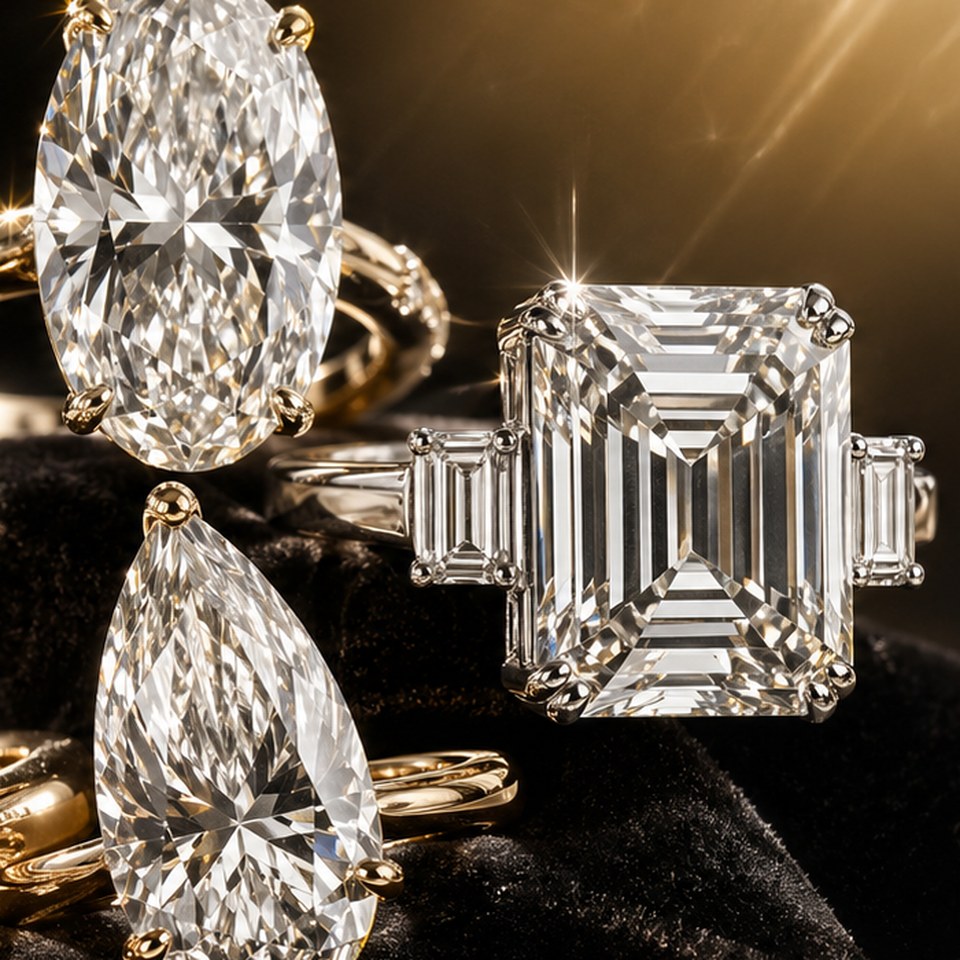
Emerald frame
Emerald-cut power look
A cleaner, architectural style that makes the luxury angle feel serious instead of gimmicky.
Where romance meets the invoice
This is the commercial core of the site: lab and natural stones can look close enough to flirt, then land worlds apart once the numbers arrive.
Comparison board
These are broad consumer-facing ranges meant to show the size of the gap fast. Certification, make, fluorescence, merchant posture, and timing can still move the final number hard.
| Carat | Shape | Typical quality | Natural retail | Lab retail |
|---|---|---|---|---|
| 0.50 ct | Round | D-F / VVS2-VS1 | $1,400-$3,000 | $350-$700 |
| 1.00 ct | Oval | G-H / VS2 | $4,600-$8,900 | $800-$1,600 |
| 1.50 ct | Emerald | F-G / VS1-VS2 | $8,900-$16,500 | $1,200-$2,400 |
| 2.00 ct | Pear | G-H / VS2 | $12,800-$24,500 | $1,700-$3,500 |
| 3.00 ct | Cushion | H-I / SI1-VS2 | $21,000-$44,000 | $3,000-$6,200 |
| 5.00 ct | Radiant | G-H / VS1-VS2 | $48,000-$110,000 | $6,800-$14,500 |
Luxury context
The tables do the work. The ring photography keeps the room from feeling cheap.
A cleaner, architectural style that makes the luxury angle feel serious instead of gimmicky.
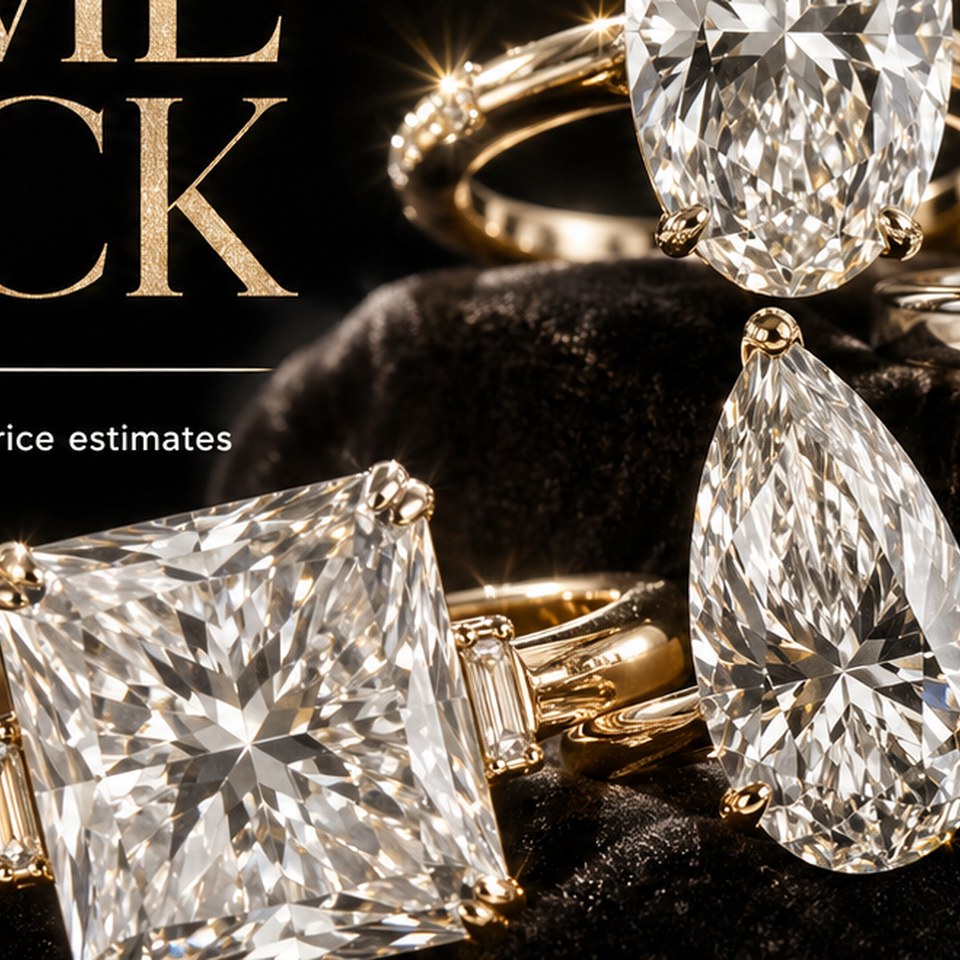
A softer, more editorial ring visual that still feels rich enough to support the sale narrative.
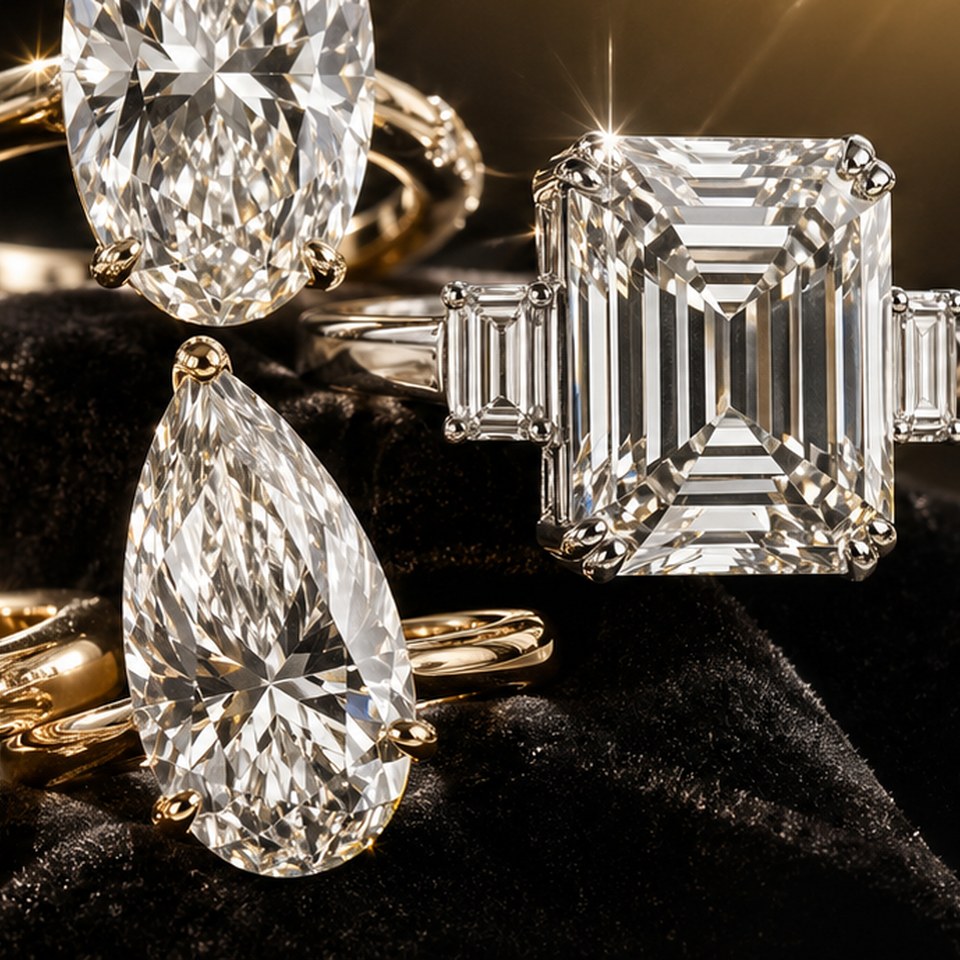
Great for pages about contrast, pricing gaps, or any story built around side-by-side buyer choices.
What pushes higher
Top color, cleaner clarity, better make, and stronger certification can punish the buyer fast once the stone crosses into natural territory.
What compresses faster
Lab-grown pricing can compress with startling speed, which changes the emotional math the minute shoppers stop looking only at size.
Why this matters
The whole experience is anchored to a recurring pain point: shoppers want context before they overpay, panic, or misread the certificate in front of them.
Practical use
Share it
People share huge rings. They also share the numbers once they realize how vicious the lab-versus-natural gap can look on paper. That is where this page earns its keep.